I’ve long been convinced that artists have a responsibility to work actively for the betterment of the world. I would go so far as to say that this must be a basic condition for all humans. Artists, however, are uniquely placed to challenge, disrupt, provoke, to slip through the defences of calloused minds behind which dwell ‘the better angels of our nature’ (Pinker, 2012) (my wife gifted me a copy of this work of Steven Pinker’s earlier this year, in an attempt to help me contextualise my near overwhelming despair; I’ve not yet gotten as far as reading it, but the spine has certainly taken root in my mind). It’s no surprise that artists are often at the top of the hitlist for freshly minted totalitarian regimes. These prophets, historians, sorcerers, ostracised visionaries (Attali, Jameson, & McClary, 2009, p. 12), are too troublesome to be allowed to roam free. On the other hand, they can do wonders for the popularity of despots and inhuman ideological currents: ‘[a]rt is not neutral. It either upholds or disrupts the status quo, advancing or regressing justice’ (brown, 2017, p. 165). Far too many artists, particularly those of privilege, have become comfortable in their superficially positive lives, turning away from even the most homeopathic attempts at self-reflection. Others don’t have the benefit of safety in neutrality. As Rev. angel Kyodo williams succinctly puts it, ‘[t]he momentum of the dysfunction of how privilege operates in this society is such that if we’re not interrupting, we’re actually participating in it’ (williams, Owens, & Syedullah, 2016, p. 119). Both brown and williams demand that we not wait until the wolves are at our door, but drive away the wolves wheresoever they may be found. To do otherwise is to enact violence.
But how do we ensure that our art sets a course for the better, especially in the face of significant economic, political, and personal challenges, forced as we are to exist within the confines of a late-stage capitalist nightmare? After all, there is very little that hasn’t now been monetised to some degree. Pick any artist of repute, any disruptor, any unabashedly anti-establishment rogue. On some level, they’ve all been commodified, their righteous indignation alchemised into easy gold, the disenfranchisement of youth a perennial spring of profitable culture. The trick is to offer just enough rebellion, to allow artists to move within Chomksy’s ‘spectrum of acceptable opinion’ (Chomsky & Barsamian, 1998, p. 43). A little grit is good for the pocket. People love a rebel, and so does the industry. Audiences get to feel like they’ve registered their discontent whilst corporate shills languish backstage on piles of cash. A modicum of resistance does wonders for a pliable population.
In reality, things are never simply one thing or the other. Commercial success and a degree of complicity with industry machinations don’t preclude the possibility of inciting meaningful change, of shifting currents of consciousness, of challenging those very structures which have allowed an artist to garner broader attention: ‘[p]opular culture is indeed a site for the iteration and reiteration of dominant values… [b]ut the very sites where ruling ideologies can be articulated are also the places where they can be disarticulated’ (Lipsitz, 2001, p. 108). Describing the various tensions inherent in hip hop culture, Rose observes that ‘it is these contradictions that make the culture coherent and relevant to the society in which it operates. It is the contradictory nature of pleasure and social resistance in the popular realm that must be confronted, theorized, and understood, instead of erasing or rigidly rejecting those practices that ruin our quest for untainted politically progressive cultural expressions’ (Rose, 1994, p. 24). There is a caution here against an unquestioned penchant for ‘untainted’ expressions of progress which in fact serves to embed and confirm existing hierarchies. As Salaita summarises, ‘[o]bedience and disobedience aren’t attitudes so much as the material outcomes of one’s ethical choices in this world’ (Salaita, 2024). Resistance can be performative rather than substantive and therefore, at its worst, a mechanism of complicity and preservation.
There is, of course, much that takes place outside of corporate, commercial spaces, community-rooted emanations not belonging, nor beholden, to capital, operating according to constantly shifting logics and relations, mobile and rhizomatic, decentralised and puckish. It is in this liminality that the seeds of the Prayers for Palestine project were sown.
Through my record label Turquoise Coconut, co-founded with violinist Marie Schreer in 2016, I have over the past seven months sought to respond meaningfully and visibly to the immense suffering experienced by the Palestinian people (this is not to underplay the suffering inflicted upon hundreds of Israelis, many of them civilians, on October 7th; the magnitude of the response from Israel is, however, in no way proportional nor legal, and there is no doubt in my mind that what we are witnessing is ethnic cleansing and genocide). We are in good company: I take great comfort in the courage of individuals and communities the world over in their loud refusal to turn away from such transparent colonial violence.
Having released in the early days of the conflict a compilation album (‘The Olive Tree’) featuring selections from the label’s catalogue, as well as putting on a benefit concert in December 2023 at Newcastle’s cooperative venue The Globe[1], curating a line-up of five local acts, we decided to plan another performance in a different vein. Rather than a furious reaction to the unjustifiable warfare being waged upon a civilian population in the name of self-defence, this was to be an opportunity for collective contemplation on the themes of grief, loss, and suffering, but also hope, forgiveness, and transformation, the opening of a space for grounded and patient reflection in a spirit of communal resistance. Concurrently, we began the process of producing a record from scratch, envisioned in the same spirit as the live event, driven by a fierce need to present an artistic document created in direct response to recent events, and to channel a collective commitment to improvisatory practices towards potentially transformative ends. For Fischlin, Heble, and Lipsitz, improvisation is ‘an artistic, political, social, and moral practice that cannot succeed on its own terms unless it does meaningful work in the world’ (Fischlin, Heble, & Lipsitz, 2013, p. xv). Although doubt is a frequent friend in my pursuit of artistic means of resistance (‘doubt is heavy on your chest… it’s hard to know if all this work has any impact’ (Weaver, 2016)), I put my faith in the belief that where the spirit leads, wisdom will follow (‘uncertainty is something you’re learning to value, instead of hurt agree to listen and turn up the volume… be courageous to release all expectations and assumptions though’ (ibid.)[2]).
My frequent collaborator and good friend John Pope and I sat down in March at my home in Gateshead to record a series of improvisations with percussion and small instruments, which would form the foundations for the contributions of other musicians and spoken word artists. This instrumentation was intended both to avoid harmonic implications, as well as to evoke an atmosphere conducive to meditation and contemplation. There is something undeniably otherworldly and transcendent in the swirling clouds of metallic vibrations, in potent contrast to the chthonic pull of wood struck, scraped, or rattled. Sky and Earth, Above and Below. (These qualities, of course, take on a much more disturbing significance when considered in the light of modern warfare).

Originally intending to record one long piece, Pope and I instead opted to break the session up into smaller chunks, for reasons of simplifying the distribution of the contributions to follow, as well as giving ourselves some space in which to breathe between the intense periods of creative contemplation on the plight of a people. I have found in the past months that there is a rawness just below the surface of my functional being; it doesn’t take much to shatter the veneer of collectedness. The most innocuous of musical situations can plunge me into a profound hopelessness. Although Pope and I spend hours together weekly, in various shared projects, there was a disarming intimacy to the recording, heightened by the closeness of my small studio space.
The resultant four demos were sent out to a series of co-participants, both musicians and spoken word artists, who were invited to respond to the heartbreaking situation in Gaza as well as to the ambient demos. Over the course of two months or so, I received piece by piece these additional materials. Some artists were very specific in the placement of their recordings; others not at all. These latter I would weave into the mix at a place that felt right. This was not a time-consuming process. Perhaps I’m currently prone to uncritical over-spiritualisation, but things seemed almost to work themselves out. There were obvious lacunae into which spoken contributions perfectly slotted, the music ebbing and flowing naturally in anticipation of and response to the sentiments expressed therein. From time to time, I would upload newer versions, giving later contributors the opportunity to hear a more fleshed out stimulus (beyond a deadline, there was no system to all of this: people simply went at their own pace and in a manner of their own choosing). Although all the artists worked to some degree or other ‘blind’, there emerged an extraordinary synchronicity, as though all were pulled into alignment by the inexorable gravity of the urgent desire for peace. One such moment is the climax of ‘Fourth Prayer,’ which blossoms out of the words of the recently murdered Palestinian poet Hiba Abu Nada as voiced by Nisha Ramayya, in which a chorus of vocals, clarinet, shakuhachi duo, waterphone, and percussion collide in a phantasmagoria of defiant jubilation. By and large, these parts were recorded in isolation with only the original percussion tracks as inspiration, a fact which continues to astonish me.
At some point, the benefit concert and the album became intertwined in my mind, emanations of the same impulse expressed in different sites and media. With all the contributions received, I finalised the edit and mix, Pope mastered the record, and five days later it was released on Bandcamp, just two days before the ‘Prayers for Palestine’ performance[3].
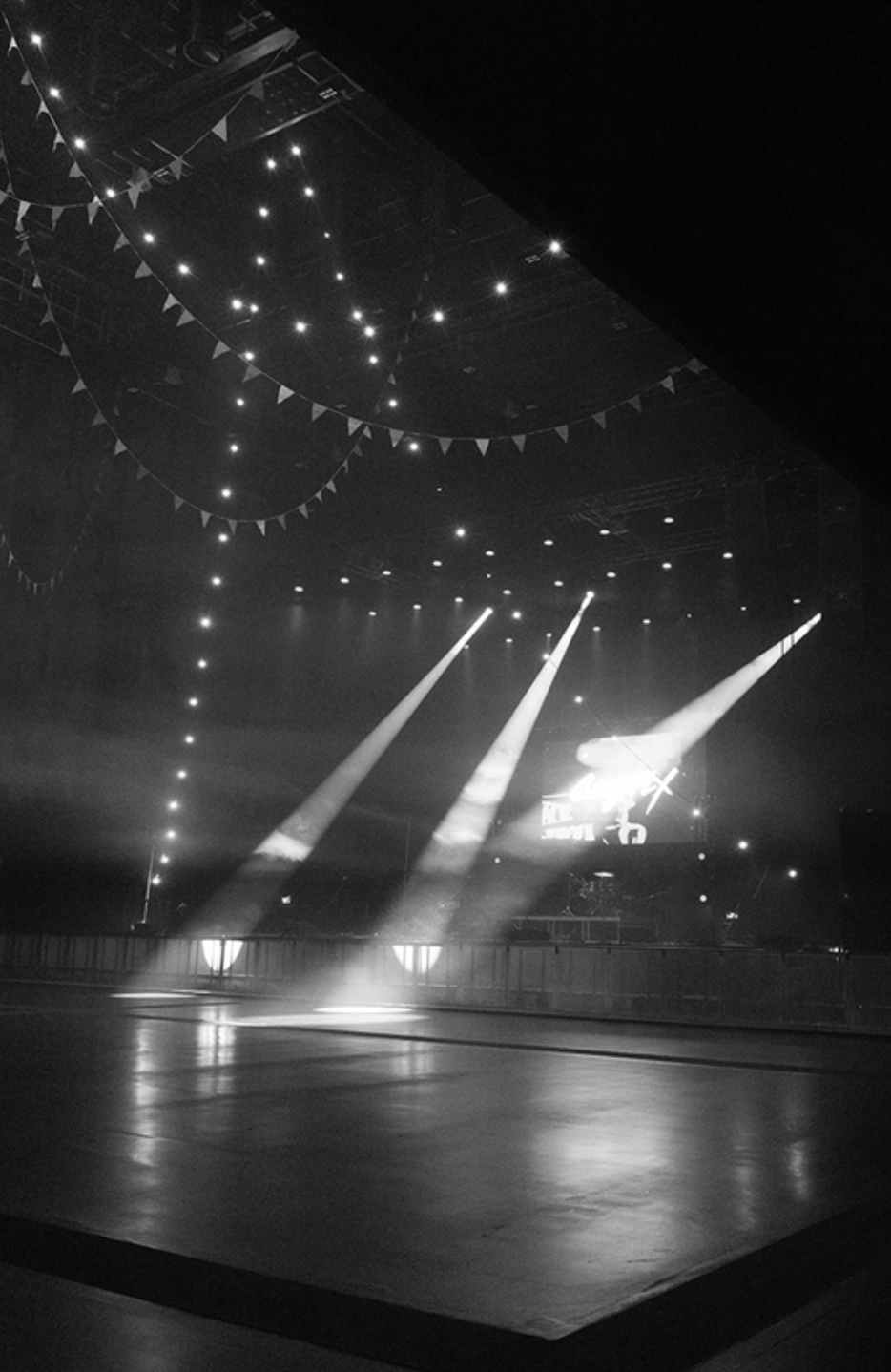
With the live band comprising five of the ten musicians featured on the album, it felt natural to assume the same contemplative improvisatory approach as a basis for the performance, and in fact it provided us with a useful template: although we’ve all played together in various configurations over several years, we’d never played as a quintet. One of the two poets, Tahmina Ali, was also new to performing with musicians, and so it became a useful reference point for her to envision how the set might function and feel. Taking place again at The Globe, the evening would be split into two sets, each around forty minutes long, featuring the same band but different speakers: Tahmina Ali, followed by Ellie Armon Azoulay. As with the album, the plans for the performance took shape somewhat of their own accord. It was only on the day itself that it occurred to me to wonder whether two substantial sets of improvised quintet music, given greater clarity and focus by spoken interjections, might not be incredibly trying, even traumatic, for the artists involved, none of whom are strangers to long-form performance, but not under such woeful circumstances.

It became very quickly apparent that, in contrast to much of the album, this was not going to be an artistic rumination limited to the quietly contemplative. Instead, the music seemed to oscillate between a gentle, almost childlike, voice of hope, and a blistered, scorched outpouring of despondency, responding in turn to Ali’s defiant and eloquent criticisms of complicity and Azoulay’s Jewish prayers of lamentation and supplications for the people and the land. Both sets left us reeling, needing some time to solitarily reflect on the visceral emotions laid bare in the communal space of performance. Speaking personally, I experienced in the aftermath a strange mixture of elation, sorrow, overwhelm, and gratitude. I was in no doubt as to the significance of the event, however, and this conviction remains. As my shakuhachi teacher Cornelius Boots opined about the record (on which he also features), it doesn’t feel like an empty statement, but rather something that might work towards effecting small changes in levels above and below people’s conscious awareness. I believe the same to be true of the ‘Prayers for Palestine’ concert.
Before reading her final poem of the evening, I was struck by Ali’s assertion that ‘it’s incredibly hard as artists to use our craft… our art, and platform as a form of resistance and to fight against this oppression, so I want to applaud every artist out there who is doing that’ (Ali, T., personal communication, May 16, 2024). As a community of artists in the North East of England and much further afield, this project, spanning nationalities, faiths, cultures, and disciplines, represents a search for our own form of resistance, an attempt to ‘understand and then subvert the customs maintaining’ amoral structures of power (Salaita, 2024). In this instance, this took the form of a public display of refusal to abide by establishment sanctioned narratives about the genocide[4]; a cross-disciplinary, multicultural creative experiment forging threads of unified defiance across space and time; and an evening of simple togetherness and loving kindness, the mutual bathing of wounds through collectively embodied song.
This may be resistance writ small, but ‘[w]hat [begins] as individual acts of rebellion… can become a collective opportunity for a reorientation of our shared fugivity’ (williams, Owens, & Syedullah, 2016, p. 23). As I noted after taking part in a corporate concert in March, ‘even when the undercurrents and backstage machinations might be considered problematic, musicking is [at its core] a radical, liberatory act, a non-transactional softening of edges, rendering systemic subjugation temporarily redundant, non-existent, irrelevant, impossible’ (Garner, 2024). ‘Prayers for Palestine’ may be a drop in the ocean, the briefest of stretches on a staggeringly long road, yet with each and every second of disobedience we deconstruct link by link the chains of colonialism and patriarchal capitalism and lift each other into the clear light of freedom.
‘You were first created out of love, so carry nothing but love to those who are trembling’ (Nada, 2023).
John Garner
[1] It is to The Globe’s great credit that the venue has been prepared to host several events in support of the Palestinian and anti-war cause. As of writing, this decision is unfortunately not without consequences for organisations and institutions.
[2] I discovered Complex Movements’ 2016 ‘Beware of the Dandelions’ through the recommendation of adrienne maree brown in her work ‘Emergent Strategy: Shaping Changes, Changing Worlds’, with a soundtrack composed and performed by Invincible/Ilana Weaver. It is a powerful multimedia reflection on the darker prospects of humanity that speaks to the situation in Palestine with a prescient clarity. The track ‘Manmade Drought’ could have been written in response to the genocide.
[3] Please visit https://turquoisecoconut.bandcamp.com/album/prayers-for-palestine for comprehensive credits.
[4] This is not without personal risk: by way of example, Jonathan Cook reports that more than 2,000 student protestors have so far been arrested at American universities, as well as four individuals being arrested in the UK by the Metropolitan Police for holding up a sign showing ‘a white dove – a symbol of peace – carrying a key flying through a breach in Israel’s apartheid wall around the West Bank.’ The extremely tenuous accusation was that the sky-blue colouring in the image alluded ‘to the clear skies on the day of Hamas’ attack on 7 October’ (Cook, 2024).
References
Attali, J., Jameson, F., & McClary, S. (2009). NOISE: The Political Economy of Music. (B. Massumi, Trans.) Minneapolis: The University of Minnesota Press.
brown, a. m. (2017). Emergent Strategy: Shaping Change, Changing Worlds. EBSCOhost.
Chomsky, N., & Barsamian, D. (1998). The Common Good. Monroe, Maine: Odonian Press.
Cook, J. (2024, May 10). Biden’s war on Gaza is now a war on truth and the right to protest. Retrieved May 17, 2024, from Substack: https://jonathancook.substack.com/p/bidens-war-on-gaza-is-now-a-war-on?utm_source=profile&utm_medium=reader2
Fischlin, D., Heble, A., & Lipsitz, G. (2013). The Fierce Urgency of Now: Improvisation, Rights, and the Ethics of Cocreation. Duke University Press.
Garner, J. (2024, March 14). Overwhelm at live music [unpublished].
Lipsitz, G. (2001). Time Passages: Collective Memory and American Popular Culture. Minneapolis: University of Minnesota Press.
Nada, H. A. (2023, November 27). ‘Not Just Passing’: A Poem by Hiba Abu Nada. Retrieved May 17, 2024, from Arablit: https://arablit.org/2023/11/27/not-just-passing-a-poem-by-hiba-abu-nada/
Pinker, S. (2012). The Better Angels of Our Nature. London: Penguin Books.
Rose, T. (1994). Black Noise: Rap Music and Black Culture in Contemporary America. Hanover, NH: Wesleyan University Press.
Salaita, S. (2024, February 12). The Customs of Obedience in Academe. Retrieved February 13, 2024, from Steve Salaita: https://stevesalaita.com/the-customs-of-obedience-in-academe/
Weaver, I. (2016). Doubt [Recorded by I. Weaver]. On Beware of the Dandelions: Soundtrack. Retrieved from https://complexmovements.bandcamp.com/album/beware-of-the-dandelions-soundtrack
williams, R. a., Owens, L. R., & Syedullah, J. (2016). Radical Dharma: Talking Race, Love, and Liberation. Berkeley, California: North Atlantic Books.


 MEANS
MEANS 